Table of contents
Booking platforms have trained travelers to move fast, lock dates early and follow pre-packed schedules, yet a growing body of tourism research suggests that over-structured itineraries can quietly shrink what you actually experience, from fewer spontaneous encounters to higher stress and even lower satisfaction when plans inevitably shift. In 2026, with air traffic still volatile in parts of Europe and the Middle East and cities managing heavier visitor flows, the question is no longer whether planning helps, but when it starts limiting your adventure potential.
When planning turns into a cage
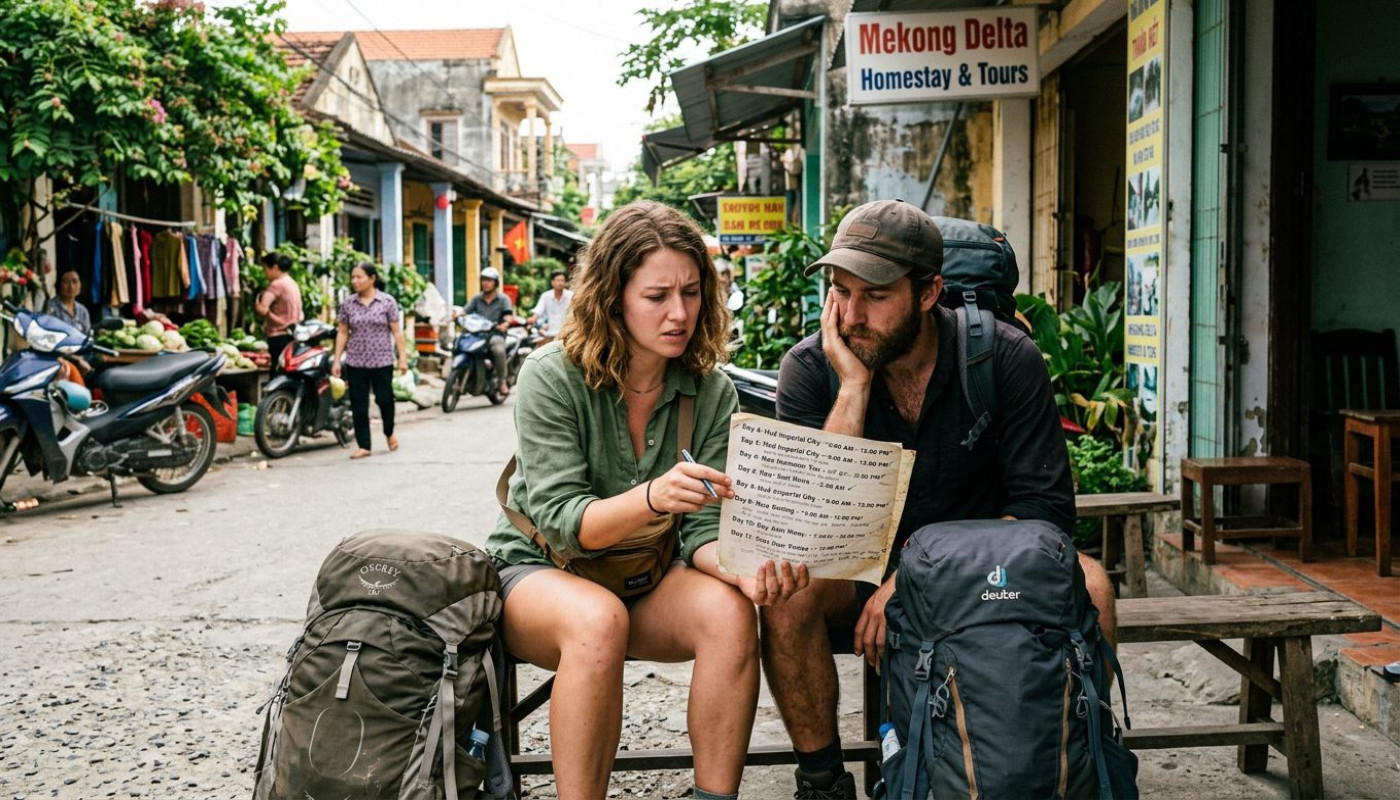
Could your itinerary be the problem? Many travelers assume that more planning equals more control, and that control equals a better trip, yet tourism psychologists have long observed a “paradox of choice” and a “planning fallacy” that can backfire once you are on the ground. The planning fallacy, described in academic work in behavioral science, captures our tendency to underestimate delays and overestimate how much we can fit into a day, and in travel it shows up in familiar ways: a museum visit that takes twice as long, a metro line temporarily closed, a restaurant queue that eats an hour, and suddenly the schedule becomes an anxious chase rather than a guide.
Data points are increasingly visible in how people travel and what they regret. The UN World Tourism Organization (UN Tourism) reported a full recovery of global international tourism to around pre-pandemic levels in 2024, and with demand strong, popular urban destinations have faced crowding patterns that make rigid timing fragile. When visitor volumes spike, the penalty for tight scheduling rises: security lines lengthen, timed entries sell out, and small disruptions cascade. In parallel, academic studies in tourism journals have linked “time pressure” and “goal overload” to lower perceived quality of experience, especially in city breaks where travelers try to stack iconic sites, food “musts” and day trips into three or four days. The outcome is not always fewer activities, but a thinner memory of them, because attention is spent managing the clock.
The cage effect is amplified by social media itineraries that function like checklists. They promise an optimized path, yet they also standardize movement, pushing crowds to the same photo spots at the same hours, and shrinking the room for unplanned detours that often become the highlight of a trip. If you have ever returned home with hundreds of pictures but a nagging feeling of having “missed” the place, the itinerary may have done its job too well, and you followed it rather than living inside the city’s rhythm.
The hidden cost of every “must-see”
Every “must-see” has a price tag you do not see. The obvious costs are money and time, but the hidden costs are flexibility, recovery and the capacity to say yes to what appears unexpectedly, a street concert, a local recommendation, a sunset you did not plan to chase. Travel medicine and public health advice has also emphasized fatigue management for years, and while not framed as “itinerary design”, the logic is the same: overloading days increases exhaustion, and exhaustion makes everything feel smaller, including the very experiences you paid to reach.
Consider the arithmetic of city touring. If you schedule eight stops in a day, each with transit, waiting, entry and the inevitable “we got turned around” moment, you are building a system with no slack. Operations researchers would call it a brittle plan: when one element fails, the whole sequence degrades. In real cities, delays are normal, and in peak periods they are predictable. Airlines and airports publish performance metrics that remind us how common disruptions are; Eurocontrol has repeatedly documented high seasonal pressure on European air traffic management, and major hubs routinely warn passengers to arrive earlier during peak travel weeks. On the ground, public transport networks post real-time service changes, and museums implement timed tickets precisely because demand peaks are not theoretical.
The psychological cost is measurable too. Tourism scholars use satisfaction surveys and experience sampling methods to track how travelers feel during a trip, and a recurring finding is that autonomy, the sense that you can choose in the moment, correlates strongly with enjoyment. A “must-see” list can create the opposite feeling: you are being pulled by obligations. You may finish the day having achieved the list, yet feeling oddly behind, because the next day’s list already starts calling. The irony is that the more you try to guarantee a perfect trip by locking everything down, the less room you leave for the conditions that make a trip feel personal.
How to build slack, not chaos
Freedom does not mean improvising everything. The most resilient itineraries borrow from risk management: identify what truly matters, protect it with time buffers and let the rest float. Practically, that often means anchoring each day around one “non-negotiable” experience, then designing two optional layers around it, a nearby walk, a market, a café, a neighborhood you can enter or skip without guilt. When the day runs smoothly, you stack the optional layers; when it does not, you still feel successful because you hit the core.
Travel advisors often recommend geographic clustering, and the logic is stronger than it looks. Every cross-city transfer is not just transit time, it is uncertainty: you may misread a sign, hit an unexpected queue, or simply decide to stop because something catches your eye. Clustering reduces the number of transfers and increases the chance that the day feels spacious, and it also gives you permission to linger. In cities like Istanbul, where neighborhoods shift mood block by block and ferries, trams and hills shape the experience, the difference between a cross-city checklist and a neighborhood-first approach can be dramatic.
Tools can help without turning into a leash. Instead of locking every hour, use time windows, morning for a landmark, afternoon for a neighborhood, evening for food and a view, and keep at least one open block each day. If you want to reserve key entries or transport in advance, do it selectively, then treat the rest as a flexible script. For travelers who want structure but not rigidity, curated options that can be mixed and matched are often a good compromise, especially when they make logistics lighter while leaving the day’s tempo in your hands. In that spirit, some visitors use a city-focused resource such as https://www.istanbul-trip.com to map possibilities and understand practical constraints, then decide what to lock and what to leave open, rather than buying into a minute-by-minute march.
Istanbul proves the point in one afternoon
Istanbul is a city that punishes over-planning. Try to race from an early museum slot to a lunch reservation on the other side of the Golden Horn, squeeze in a bazaar, then catch a sunset viewpoint, and you may spend the day negotiating crowds, traffic and gradients, with little space to absorb the city’s texture. Yet if you build slack, Istanbul rewards you quickly. A ferry ride becomes more than transport, it becomes a moving balcony; a detour into a side street turns into a tea stop and a conversation; an unplanned pause becomes the moment you remember most.
The city’s tourism dynamics also illustrate why rigidity is increasingly risky. Istanbul sits at the crossroads of global demand, and Türkiye has been among the countries benefiting from the rebound in international tourism that UN Tourism documented after the pandemic shock. With that rebound comes variability: some days a site feels calm, other days it surges. Weather changes, cruise schedules, school holidays and event calendars can all shift the rhythm. A rigid itinerary assumes a stable environment; Istanbul is not stable in that sense, it is alive. That is precisely the appeal, and also the reason to design days that can breathe.
There is also a cultural argument. The city’s pleasures often unfold in the in-between spaces: the call to prayer heard from a courtyard, the sound of backgammon pieces in a café, the slow reveal of a skyline from a hillside. These are not “attractions” that you can schedule for 14:10. They happen when you are present, and presence is hard to achieve when you are constantly checking the next stop. If your goal is adventure, not just completion, Istanbul makes a compelling case for plans that guide you without governing you.
Make room for the unexpected
To travel better, reserve less and protect time. Set one daily priority, cluster sights by neighborhood and keep a buffer for delays, weather and curiosity. Budget for flexibility too, whether it is refundable tickets or an extra night, and check local discount cards or museum passes that can reduce costs without forcing a rigid schedule.
Similar articles

Why Minimalist Packing Revolutionizes Your Adventure Experiences

Lost, Found, And Inspired: How Unplanned Detours Shaped My Perfect Itinerary

From Thrill-seeking To Soul-searching: Redefining Travel Activities

How To Choose The Perfect Luxury Stay For International Events?

Unveiling The Thrills: Top Adventure Activities For Thrill-Seekers

How To Choose The Best ESIM For Your Caribbean Travels?

Exploring The Benefits Of Chartering A Sailboat Without A Skipper

Exploring Hidden Culinary Gems: Discovering Local Foods While Traveling